
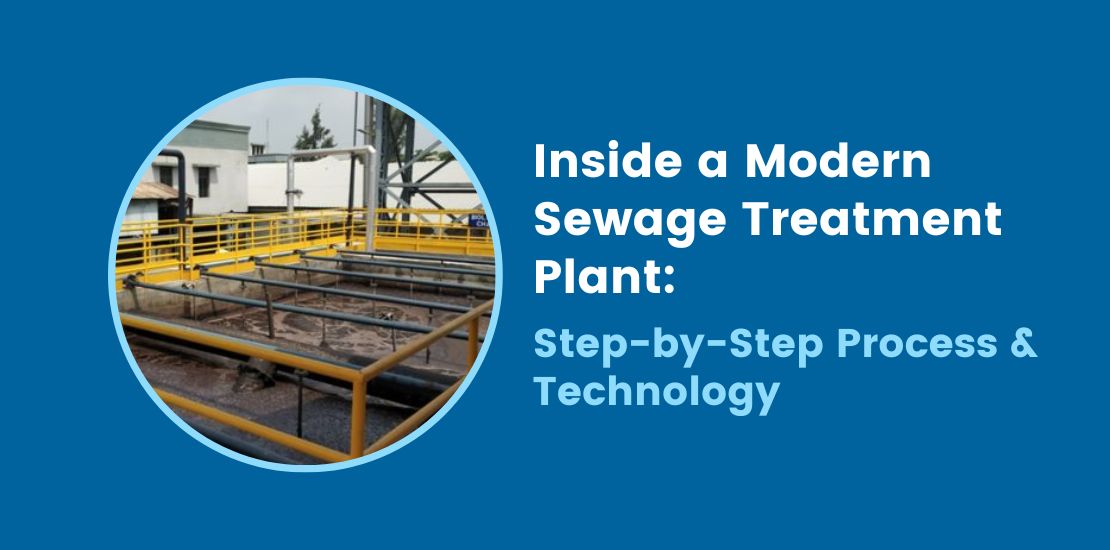
Have you ever considered that the water you drink today might have been someone’s shower water yesterday? This remarkable transformation is made possible by Sewage Treatment Plants (STP plants), the unsung heroes of public health and environmental protection. These facilities are not just a municipal necessity; they are a cornerstone of sustainable water management for communities, industries, and commercial establishments worldwide.
This guide will demystify the Sewage Treatment Plants Process and explore the critical Type of STP Plants technologies, empowering you to understand how wastewater is reclaimed and how to select the right system for any application.
What is a Sewage Treatment Plant (STP Plant)?
A Sewage Treatment Plant is a facility designed to collect, treat and purify wastewater from residential, commercial, and industrial sources. Its core mission is to remove physical, chemical and biological contaminants, producing an effluent that is safe for release into the environment or for reuse. Without effective treatment, wastewater degrades ecosystems, depletes oxygen in water bodies and poses serious public health risks.
In essence, an STP Plant turns harmful sewage into safe water, closing the loop in our water cycle and protecting our planet.
The Sewage Treatment Plants Process: A Step-by-Step Breakdown
The journey from wastewater to clean water is methodical and multi-staged. Modern plants rely on high automation, but they still follow the same core principles. Here’s a look at the typical Sewage Treatment Plant Process:
1. Preliminary Treatment
This first line of defense involves screening out large solids and debris. Wastewater passes through bar screens to remove items like plastics, rags and sticks. It then enters a grit chamber, where sand, gravel, and other heavy inorganic materials settle out. This stage protects downstream equipment from damage and wear.
2. Primary Treatment (Physical)
In primary sedimentation tanks, the flow is slowed, allowing organic and inorganic solids to settle by gravity. This forms a primary sludge, which is removed for further processing. Meanwhile, oils and greases float to the surface and technicians remove them. This stage removes a significant portion of suspended solids.
3. Secondary Treatment (Biological)
This is the heart of the Sewage Treatment Plants Process, where dissolved organic matter is broken down. It relies on introducing beneficial microorganisms that consume harmful pathogens and pollutants.
Common Method: The Activated Sludge Process (ASP) aerates the wastewater in a tank, fostering bacterial growth. The mixture then moves to a secondary clarifier where the microbial mass settles out, leaving clarified water.
Outcome: After secondary treatment, the system delivers water that is usually safe to discharge, but advanced requirements may call for further polishing.
4. Tertiary/Advanced Treatment (Polishing)
To achieve the highest quality for sensitive discharge or reuse (e.g., irrigation, groundwater recharge, industrial cooling), tertiary treatment is employed. This stage targets specific remaining contaminants:
Nutrient Removal: Eliminating nitrogen and phosphorus to prevent algal blooms.
Disinfection: Using UV light, chlorine, or ozone to kill any remaining bacteria and viruses.
Filtration: Passing water through membrane filters (like in MBR technology), sand filters, or activated carbon to remove fine particles and trace organics.
The resulting water is clear, odourless and safe, completing a vital environmental service.
Types of STP Plant Technologies
Choosing the right system is crucial for efficiency, compliance and cost-effectiveness. Here’s a breakdown of the most common types of wastewater treatment plants technologies in use today:
1. Activated Sludge Process (ASP)
How it works: A classic and robust biological treatment using aeration and microbial flocks.
Best for: Large-scale municipal or industrial applications with consistent high flow and ample space.
2. Moving Bed Biofilm Reactor (MBBR STP Plant)
How it works: Uses thousands of floating plastic carriers (biofilms) in an aerated tank, providing a large surface area for bacteria to grow. Highly efficient and resilient to load fluctuations.
Best for: Projects with space constraints, variable loads, and a need for easy, robust operation.
3. Sequential Batch Reactor (SBR)
How it works: A fill-and-draw, time-based system where aeration, settling and decanting occur sequentially in a single batch tank or a modern sewage treatment plant. Offers great operational control.
Best for: Hotels, hospitals, residential complexes, and industries with intermittent flow or where footprint is a moderate concern.
4. Membrane Bioreactor (MBR STP Plant)
How it works: Integrates biological treatment with membrane filtration (microfiltration/ultrafiltration), replacing the secondary clarifier. Produces the highest quality effluent in a compact footprint.
Best for: Use this system in applications that prioritize treated‑water reuse (e.g., landscaping, toilet flushing) and have limited space. Requires more technical oversight.
5. Extended Aeration ASP
How it works: A variation of ASP with longer aeration times, leading to more complete organic breakdown and stable sludge.
Best for: Smaller communities, housing societies and commercial buildings seeking a low-maintenance, reliable system.
Key Factors for Selecting the Right Sewage Treatment Plant (STP Plant)
Your clear assessment of needs helps you choose the optimal types of STP plant.
- Wastewater Volume & Composition: Daily flow rate and the nature of contaminants (e.g., domestic vs. industrial) dictate plant capacity and process selection.
- Available Space (Footprint): Technologies like MBR STP plant and MBBR offer high efficiency in compact areas, while ASP requires more land.
- Effluent Quality Goals: Define the end-use. Direct discharge to a sensitive stream requires tertiary treatment, while garden irrigation may only need secondary.
- Operational & Maintenance Resources: Consider the availability of skilled personnel. Some systems, like extended aeration, are simpler to operate than MBR.
- Capital and Operational Expenditure: Balance upfront costs with long-term energy consumption, maintenance, and sludge disposal costs.
- Regulatory Compliance: The system must consistently meet local discharge standards set by environmental authorities.
Investing in Sustainable Water Futures
Understanding the Sewage Treatment Plants Process and the array of available technologies is the first step toward responsible water stewardship. Whether for a new development, an industrial facility, or a community project, selecting the correct Types of STP Plant is a strategic decision that ensures regulatory compliance, protects the environment, and promotes sustainable water reuse.
The future of water management is circular. By investing in the right sewage treatment technology today, we safeguard public health, conserve precious freshwater resources, and build a more resilient tomorrow.
Frequently Asked Questions (FAQs)
1. What is the basic step-by-step process of a Sewage Treatment Plant (STP)?
A:- The standard STP process involves three main stages: Primary, Secondary, and Tertiary treatment. Primary treatment physically removes large solids and grit. Secondary treatment uses microorganisms to biologically break down dissolved organic waste. Tertiary treatment polishes the water using advanced filtration or disinfection to make it safe for reuse or discharge.
2. What are the different types of STP plants based on technology?
A:- Common STP technologies include Activated Sludge Process (ASP), Moving Bed Biofilm Reactor (MBBR), Membrane Bioreactor (MBR) and Sequential Batch Reactor (SBR). The choice depends on factors like space, influent quality, required effluent standards and capital/operational costs.
3. What is the key difference between an MBBR and an MBR system?
A:- MBBR uses plastic carriers suspended in tanks to grow biofilm, combining attached and suspended growth systems. MBR integrates biological treatment with membrane filtration, using ultrafiltration membranes instead of a secondary clarifier. MBR typically produces higher-quality effluent in a smaller footprint but can have higher operational complexity.
4. How do I choose the right STP technology for my facility?
A:- The right technology depends on your specific influent characteristics, available space, required treated water quality (for reuse/discharge), budget, and operational expertise. A detailed assessment by an expert engineering firm like Inovar is crucial for optimal selection and design.
5. What is the main advantage of a modern, compact STP technology like MBBR?
A:- Modern technologies like MBBR offer a high treatment efficiency in a significantly smaller footprint compared to conventional systems like ASP. They are more resilient to load variations, easier to operate, and ideal for urban or space-constrained installations where expansion is needed.
6. Can treated sewage (STP effluent) be reused?
A:- Absolutely. With appropriate tertiary treatment (like filtration and disinfection), STP effluent can be safely reused for non-potable applications such as landscape irrigation, toilet flushing, industrial cooling, and construction. This promotes water conservation and sustainability.
7. What are the common challenges in operating an STP?
A:- Common challenges include managing variable sewage inflow, maintaining the health of biological processes, handling sludge disposal, controlling odors, and ensuring consistent energy-efficient operation. Choosing a robust, well-designed system and having a proper operation & maintenance plan is key to overcoming these.