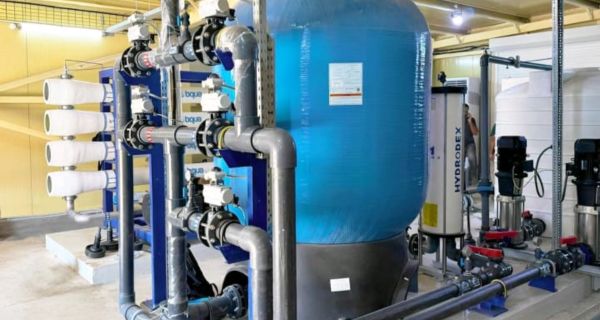
Desalination Plant
In coastal regions and water-stressed zones, desalination is more than a choice it’s a necessity. But not all desalination systems are built for real-world salinity, temperature shifts, and biofouling risks.
At Inovar, we go beyond “plug-and-play” designs. We engineer desalination plants that are resilient, energy-smart, and optimized for your exact water chemistry.
What We Do Differently
- Conduct thorough seawater/brackish water analysis before design
- Choose high-rejection membranes tailored for your TDS profile
- Integrate advanced pre-treatment (antiscalants, filters, dosing)
- Include energy recovery systems to lower operational costs
- Design with corrosion-resistant, marine-grade components
- Offer hybrid RO + Thermal options for high salinity zones
What You Get with Inovar
Reliable freshwater output from seawater or brackish sources
TDS reduction of over 99% with low energy consumption
Modular skids for easy transport and quick installation
Reduced membrane fouling via pre-engineered dosing protocols
Smart PLC-enabled operation with automated flushing and alerts
Lower lifecycle cost through optimized recovery and maintenance
Best suited for
Coastal industrial zones with no freshwater access
Power plants and refineries in saline regions
Hotels and resorts
Marine applications (ports, ships, offshore platforms)
After Installation, We Stay Involved
One-year AMC
with membrane health checks and chemical audits
Optional O&M
with trained site operators
Remote diagnostics
and membrane cleaning support
Custom-designed
chemical kits based on your intake water
Regular system
efficiency reviews and cost audits
Have an existing RO desalination setup that’s underperforming?
We inspect your intake system, redesign the pre-treatment, and upgrade membranes for higher efficiency and longer life.
Since 2019, Inovar has been redefining Desalination Plant
- We design Desalination Plant with recovery data, not guesswork.
- We engineer for high recovery and low waste, not just regulatory compliance.
- We don’t cut corners with oversized evaporators or shortcut chemistry.
- We prioritize lifecycle cost and sustainability, not just CapEx.
- We stay invested long after commissioning with AMC, audits, and performance tracking.
Frequently Asked Questions
What is desalination?
What are the primary sources of water for desalination?
Seawater: The most common source, typically with Total Dissolved Solids (TDS) of 35,000 – 45,000 mg/L.
• Brackish Water: Found in estuaries or groundwater aquifers, with lower salinity (1,000 – 10,000 mg/L), making it less energy-intensive to treat.
Why is desalination important?
With growing populations, climate change, and depleting freshwater sources, desalination provides a drought- proof, reliable source of water that is independent of rainfall. It is crucial for coastal cities, arid regions, and industries that require a consistent and high-quality water supply.
What technologies are used in desalination?
The two dominant technologies are:
• Reverse Osmosis (SWRO/BWRO): The most common and energy-efficient method for modern plants. It uses high-pressure pumps to force seawater through semi-permeable membranes, separating salts from water.
• SWRO: Seawater Reverse Osmosis
• BWRO: Brackish Water Reverse Osmosis
• Thermal Desalination: (e.g., Multi-Stage Flash (MSF) and Multi-Effect Distillation (MED)). These processes heat seawater to create steam, which is then condensed into fresh water. They are often used in conjunction with power plants (cogeneration) where waste heat is available.